
Industrial Wireless Mesh for Mining to Support Reliable Pit-to-Plant Connectivity
Free
Published date: 2026/05/04
- Location: Ahmedabad, Ahmedabad, Gujarat, India
Name: AeroMesh Systems
Phone: 990991xxxx

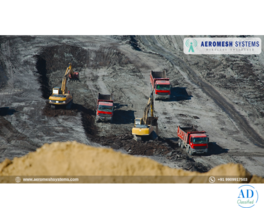
Frequent communication loss across haul roads, processing zones, and temporary excavation sites can interrupt operational visibility and delay data transmission from field systems. In large mining environments, traditional wired infrastructure often struggles to adapt to changing layouts, difficult terrain, and heavy industrial activity.
An industrial wireless mesh for mining provides a flexible approach for maintaining connectivity across dispersed operational areas. Aeromesh Systems designs outdoor wireless mesh architectures that support mobile equipment communication, remote monitoring, environmental sensing, and industrial automation requirements in mining operations. The mesh topology allows network traffic to reroute automatically if a node becomes unavailable, helping maintain uptime in demanding outdoor conditions.
The infrastructure can scale gradually as mining zones expand, supporting long-distance connectivity without requiring extensive trenching or repeated cable installation. Ruggedized wireless nodes are engineered for exposure to dust, vibration, heat, and weather fluctuations commonly found in mining environments. Multiple deployment models can be configured for fixed assets, temporary operational zones, or rapidly changing field conditions.
Organizations evaluating resilient industrial connectivity can explore deployment options for industrial wireless mesh for mining with Aeromesh Systems.
An industrial wireless mesh for mining provides a flexible approach for maintaining connectivity across dispersed operational areas. Aeromesh Systems designs outdoor wireless mesh architectures that support mobile equipment communication, remote monitoring, environmental sensing, and industrial automation requirements in mining operations. The mesh topology allows network traffic to reroute automatically if a node becomes unavailable, helping maintain uptime in demanding outdoor conditions.
The infrastructure can scale gradually as mining zones expand, supporting long-distance connectivity without requiring extensive trenching or repeated cable installation. Ruggedized wireless nodes are engineered for exposure to dust, vibration, heat, and weather fluctuations commonly found in mining environments. Multiple deployment models can be configured for fixed assets, temporary operational zones, or rapidly changing field conditions.
Organizations evaluating resilient industrial connectivity can explore deployment options for industrial wireless mesh for mining with Aeromesh Systems.
Related listings
-
 Industrial Wireless Mesh for Mining: Overcoming Harsh Terrain Communication LimitationsFreeTechnology Ahmedabad (Gujarat) 2026/04/20Mining environments often present uneven terrain and physical obstructions that degrade signal strength and disrupt traditional wireless systems. These conditions create reliability issues that impact operational coordination and safety monitoring. ...
 -
 Wireless Mesh Network for High-Density Industrial EnvironmentsFreeTechnology Ahmedabad (Gujarat) 2026/04/07Industrial facilities with dense equipment layouts and heavy interference zones often face inconsistent wireless performance. Signal blockage and overlapping coverage gaps can impact critical operations and data flow. A wireless mesh network enables...
 -
 Wireless Mesh Network for Adaptive Industrial ConnectivityFreeElectronics Ahmedabad (Gujarat) 2026/03/03Evolving industrial layouts, temporary expansion zones, and remote project sites require adaptable connectivity frameworks. Fixed infrastructure can limit responsiveness to operational change. AeroMesh Systems delivers a flexible wireless mesh netwo...
 -
 Wireless Mesh Network to Address Connectivity Gaps in Industrial OperationsFreeTechnology Ahmedabad (Gujarat) 2026/04/24In large-scale industrial environments, connectivity gaps often emerge due to terrain complexity, infrastructure limitations, or expanding operational footprints. These gaps can disrupt monitoring systems and reduce visibility into critical processes...


